
The Hermit Tarot Card: Solitude, Reflection & Inner Search
The Hermit (Arcanum IX) in the Tarot deck is a profound symbol of necessary withdrawal, embodying the archetypal quest for internal truth. Astrologically linked to Virgo—the sign of analysis, discernment, and service—the Hermit encourages us to step away from the clamor of the external world to engage in deep soul-searching. This card signifies a crucial phase of introspection, demanding self-reliance and spiritual maturity. It is not about loneliness, but the sacred act of cultivating inner guidance. By embracing silence and reflection, we illuminate our path forward, transforming accumulated experience into genuine, actionable wisdom. The Hermit reminds us that the greatest authorities reside within our own inner world.
The Essential Call to Solitude and Inner Guidance
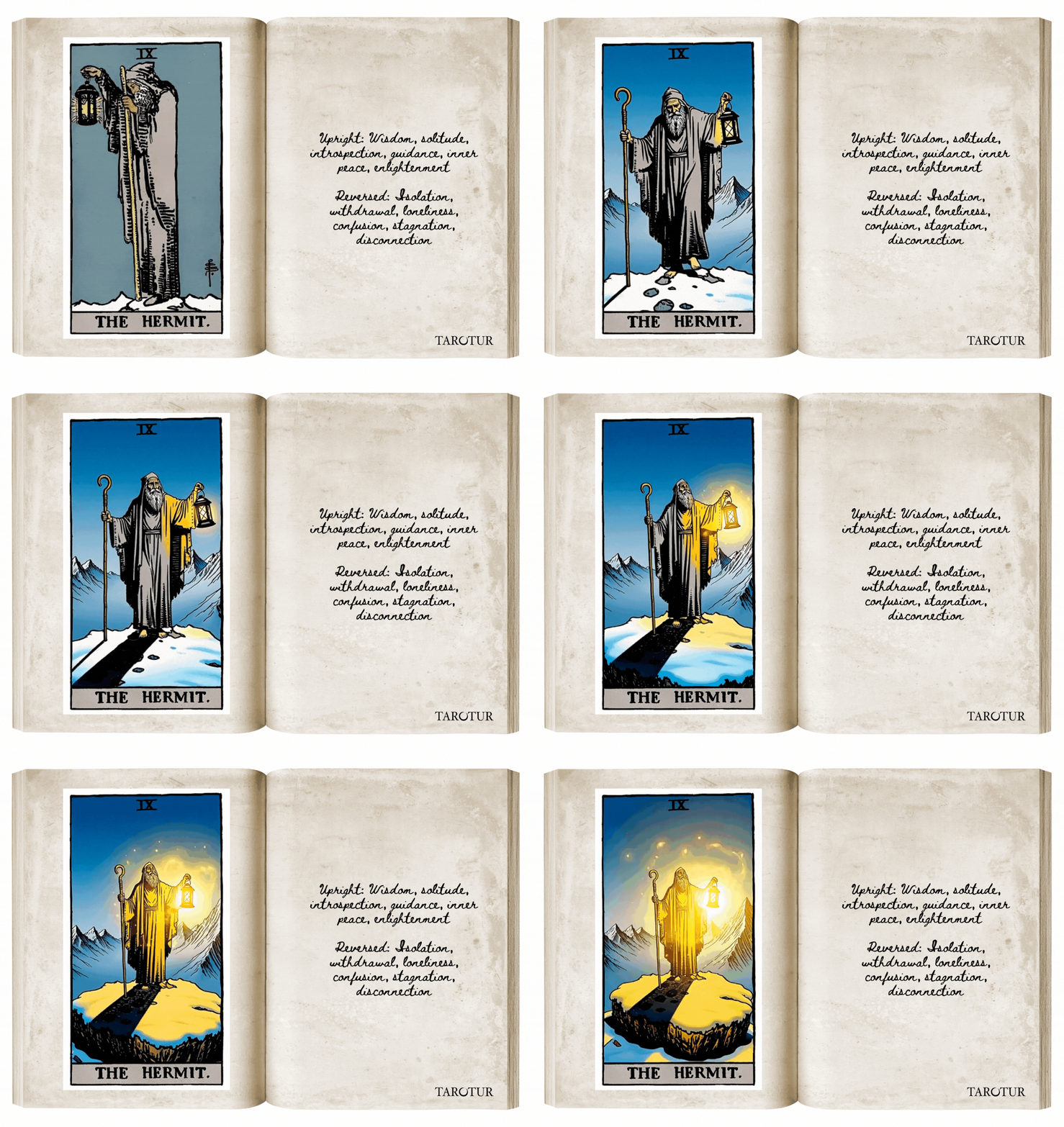
The image of the Hermit, standing atop a mountain peak, staff in hand, and a six-pointed star glowing within his lantern, is a universal symbol for the journey inward. In a culture obsessed with constant noise and external validation, the Hermit provides a powerful counter-narrative: true evolution requires periods of voluntary isolation. This solitude is not a punishment, but a deliberate spiritual discipline—a retreat necessary to filter out the static and reconnect with our own primal rhythms and emotional patterns.
When this card appears, it often signals that we have reached a plateau where external advice or superficial connections cease to be meaningful. The Hermit asks: where does your true compass lie? Inner guidance is the culmination of experience processed through consciousness, yielding an undeniable knowing. To access it, we must first master the art of listening to the subtle language of the self. This phase of deep reflection allows us to distinguish between societal expectations and the authentic desires rooted in our soul.
Practically, embracing the Hermit’s energy means carving out time for unhurried thought. This practice often involves:
- Journaling to map subconscious fears and desires.
- Dedicated meditation or deep contemplative prayer.
- Fasting from social media or high-stimulation environments.
- Seeking natural landscapes where silence is the dominant voice.
Healing Through Silence and the Depth of Shadow Work
The silence championed by the Hermit is not merely the absence of sound; it is the presence of an intensified focus on the unconscious terrain. This is the sacred space where healing begins. Often, when we pause the relentless pace of life, suppressed grief, old wounds, and unprocessed trauma bubble to the surface. This confrontation is the essence of shadow work—the psychological process of integrating the parts of ourselves we have disowned, ignored, or judged negatively.
The Hermit uses the light of his lantern—the conscious mind—to bravely explore the darkest corners of his psyche. This is a vital philosophical step: recognizing that wholeness requires ownership of both the light and the dark within. By sitting with discomfort without external distraction, we begin to decode the emotional patterns that dictate our behavior. Are we projecting our insecurity onto others? Are we repeating inherited cycles of trauma? These answers only emerge in the stillness.
The healing power of this isolation lies in self-acceptance. When we acknowledge our shadow, its power over us diminishes. The Hermit teaches us that our greatest strength is born not from ignoring weakness, but from understanding it deeply. This rigorous self-examination leads to profound psychological reorganization, transforming raw experience into refined wisdom—the gold sought by the spiritual alchemist.
The Archetype of the Wise Elder and Illumination
Beyond the role of the solitary seeker, the Hermit embodies the archetype of the Wise Elder. He is not defined by retreat alone, but by the quality of illumination he has achieved. The star within his lantern represents the light of accumulated knowledge, diligently gathered over time and tested against reality. He carries this light not just for his own path, but potentially to guide others who are ready to take the journey.
This elder archetype reminds us that wisdom is rarely instantaneous; it is the slow fruit of patience, discipline, and Saturnian maturity. The Hermit’s wisdom is authentic because it is earned, not borrowed. His staff symbolizes structure, support, and the ability to navigate difficult terrain. He has mastered the art of being his own anchor, providing a template for how we too can become fully self-supporting in our spiritual and emotional lives.
What defines the Hermit’s wisdom is that he doesn’t tell others what to do; he simply illuminates the path so they can see their *own* truth. He represents a mature understanding of cosmic cycles—knowing when to engage and when to withdraw. This archetype is often activated in our lives during major transitions, prompting us to seek genuine spiritual mentorship or to step into a mentorship role ourselves, sharing the hard-won insights gleaned from our time in the inner world.
The Hermit in Life: Interpretations for Love, Career, and Spiritual Awakening
The appearance of the Hermit provides specific advice across different areas of life, always emphasizing depth over superficiality, and authenticity over engagement.
Love and Relationships
In love readings, the Hermit advises against jumping into new partnerships or clinging to distracting connections. This is a time to cultivate self-love and self-sufficiency. If you are in a relationship, the card may suggest a need for space—not separation, but dedicated individual time for reflection so that you can return to the partnership whole, rather than needy. The best love derived from the Hermit’s energy is one based on two complete individuals sharing their illuminated paths, not relying on the other for light.
Career and Professional Path
Professionally, the Hermit favors work that requires intense focus, research, specialization, or deep consultation. It encourages the pursuit of mastery rather than mere accumulation of wealth. Careers aligned with the Hermit include academia, therapy, long-term research, detailed analysis, or roles where one acts as a trusted, objective guide. The card suggests slowing down career advancement to ensure quality and integrity. It is time to step back and ask: Am I working toward what truly resonates with my soul’s purpose?
Spiritual Awakening
As an embodiment of spiritual seeking, the Hermit is an essential prerequisite for true awakening. He signifies the movement away from dogmatic external systems toward direct, lived experience of the divine. This is the moment to commit to esoteric study, deep retreats, and consistent inner work. The light of his lantern symbolizes Gnosis—the direct, internal knowledge of spiritual truths. Embrace this solitary journey; it is the fastest route to expanding your consciousness and aligning with your highest spiritual energy.
Conclusion
The Hermit Tarot card is a profound invitation to recognize the sacredness of solitude. By voluntarily withdrawing from the noisy world, we activate the essential process of soul-searching and healing through silence. This withdrawal is neither passive nor pessimistic; it is an active engagement with our inner world, allowing us to perform critical shadow work and integrate fragmented parts of the self. By embracing the disciplined reflection symbolized by the Hermit, we accumulate the psychological and spiritual wealth needed to embody the archetype of the wise elder. The true power of The Hermit is the realization that the wisdom we desperately seek is not found externally, but waits patiently for us to turn our attention inward, illuminate our own path, and become the authority we’ve always been seeking.