
Astrology is one of the oldest symbolic languages known to humanity. For thousands of years, people have looked up at the night sky seeking meaning, guidance, and understanding. Today, astrology is more than daily horoscopes and zodiac memes — it is a powerful tool for self-awareness, personal growth, and interpreting the rhythms of life. If you are just beginning your astrological journey, the best place to start is with the planets. Each planet represents a different part of our personality, mindset, emotional world, and life expression.
In this beginner-friendly guide, we will explore the meaning of planets in astrology, why they matter in the birth chart, and core keywords to help you memorize their energies easily. Whether you are learning astrology for personal development or planning to use it professionally, understanding planetary symbolism is the foundation.
What Do Planets Represent in Astrology?
In astrology, planets are not simply physical bodies in space — they are archetypal forces. Each planet describes a function of the psyche: how we think, how we love, how we act, what motivates us, and what we fear. When a person is born, the planets occupy specific zodiac signs and houses. Their placement forms the blueprint of your personality and life tendencies.
Think of it like this:
Planet = What
Sign = How
House = Where
For example, Mercury shows how you communicate and process information. If Mercury is in Aries, the expression is direct, bold, and fast. If it is in Pisces, communication may be intuitive, poetic, or abstract. The same planet acts differently depending on the sign and the house it occupies.
Astrology Planet Keywords for Beginners
Here are simple and memorable planetary keywords you can use for study notes, social media content, or birth chart interpretation:
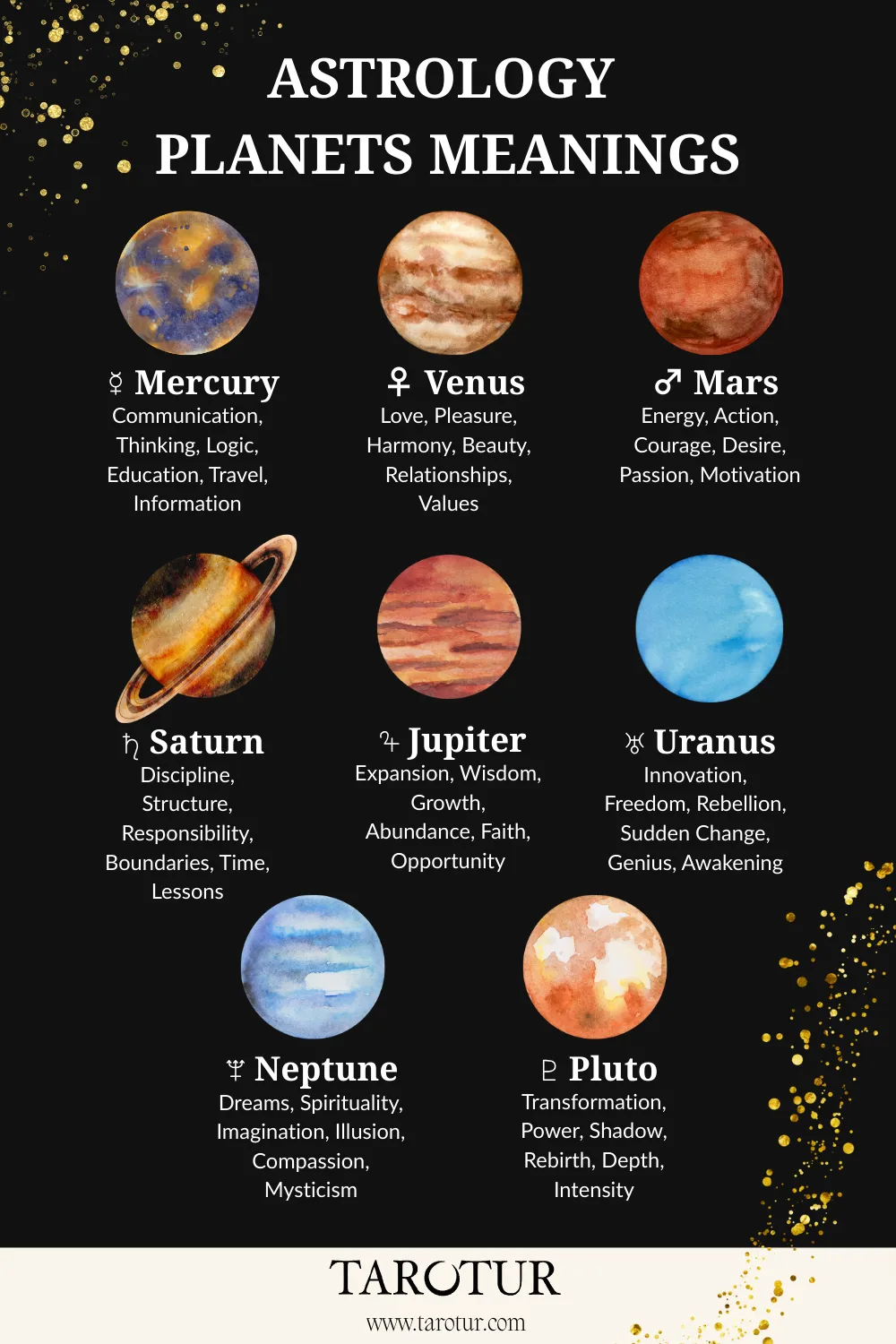
- Sun: Identity, Vitality, Ego, Purpose, Creativity
- Moon: Emotions, Intuition, Needs, Subconscious, Comfort
- Mercury: Communication, Logic, Learning, Knowledge, Travel
- Venus: Love, Harmony, Beauty, Pleasure, Values
- Mars: Action, Passion, Desire, Motivation, Drive
- Jupiter: Expansion, Growth, Wisdom, Abundance, Faith
- Saturn: Discipline, Structure, Responsibility, Time, Lessons
- Uranus: Innovation, Freedom, Rebellion, Sudden Change
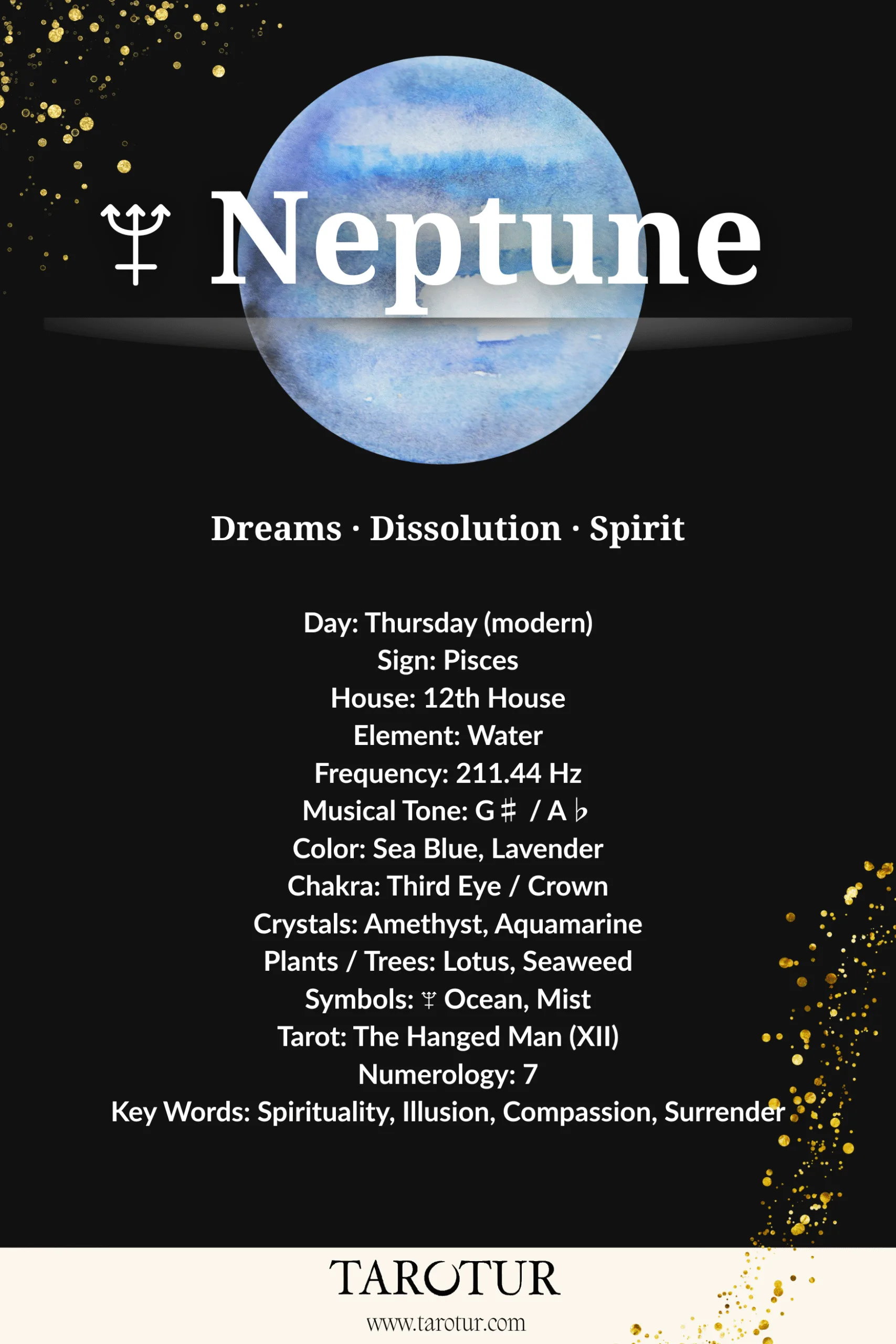
- Neptune: Dreams, Spirituality, Imagination, Illusion, Compassion
- Pluto: Transformation, Power, Rebirth, Intensity, Shadow Work
Learning these keywords will make chart reading much easier. Over time, you’ll develop deeper interpretations, but keywords are a great starting point for beginners.
How Planets Work in the Birth Chart
A birth chart is like a cosmic snapshot of the sky at the exact moment you were born. Every planet was in a zodiac sign, creating your unique energetic imprint. The planets interact with each other through aspects — angles that reveal harmony, tension, flow, or lessons between different parts of your personality.
Here’s the core structure of chart interpretation:
1. Planets – The energies themselves
They represent psychological functions such as thinking (Mercury), feeling (Moon), love (Venus), drive (Mars), and purpose (Sun).
2. Zodiac Signs – The expression of the energy
Each sign adds a tone or style.
Capricorn expresses through discipline, Libra through harmony, Leo through creativity, Scorpio through intensity.
3. Houses – The area of life where the energy plays out
Career, relationships, daily routines, family roots — each house represents a specific domain of life.
4. Aspects – How planets interact with each other
Squares may create friction, trines bring ease, conjunctions amplify energy, oppositions show balancing lessons.
Understanding these basics allows you to make sense of your chart instead of feeling overwhelmed by symbols and lines.
Why Astrology Matters in Modern Life
One reason astrology is rising in popularity worldwide is its ability to help people make sense of themselves. Rather than predicting fate, astrology reflects potential. It highlights strengths, challenges, patterns, emotional needs, and karmic lessons. Many use it alongside psychology, somatic work, and spirituality for personal development.
Astrology can help you:
- Understand personality patterns
- Navigate emotional cycles
- Improve relationships
- Identify career talents
- Gain clarity in decision-making
- Recognize inner wounds and transformation points
When you follow planetary transits — such as Mercury retrograde or Saturn return — you also learn to move with cosmic timing instead of pushing against it.
Tips for Beginners Studying Astrology
If you wish to learn astrology in a grounded and structured way, start simple. You don’t need to memorize everything at once.
Here’s an easy learning path:
✨ Start with planets + keywords
✨ Learn the nature of 12 zodiac signs
✨ Explore the meaning of 12 houses
✨ Observe your own birth chart
✨ Track transits and journal your experiences
✨ Practice — interpretation skills grow with time
The more charts you look at, the more the symbolism becomes intuitive.
Conclusion: The Planets Are the Heart of Astrology
Astrology is a cosmic language, and planets are its alphabet. When you learn what each planet symbolizes, you begin to understand yourself with greater clarity. Mercury reveals your voice, Venus your love language, Mars your drive, Jupiter your growth, Saturn your lessons. Uranus awakens change, Neptune dissolves illusions, Pluto transforms from the root.
You don’t need to believe in destiny — astrology is an invitation to awareness. When you read your chart, you read your story. You witness your potential, wounds, talents, and evolution. This is the magic of astrology: it mirrors who you are and who you can become.
Whether you are starting your journey or deepening your practice, remember — the sky is not separate from you. You are made of the same cosmic material. As above, so within.