

Planets in the 12 Houses: Life Areas, Karmic Lessons & Soul Expression
The natal chart serves as the soul’s architectural blueprint, a complex map detailing the intentions and environments of our current incarnation. While the signs describe how energy is expressed, the 12 Astrological Houses reveal where that energy manifests—the specific, tangible life arenas where we seek development, confront karmic lessons, and fulfill our purpose. These houses are defined zones, spanning from personal identity (House 1) to spiritual surrender (House 12). Understanding house placements is the key to decoding your unique energetic blueprint, showing not merely your potential, but the precise psychological and environmental settings required for authentic soul expression.
The Energetic Architecture of the 12 Houses: Mapping the Soul’s Journey
The houses are structured around the primary axes of human experience. They are divided into four quadrants, reflecting the stages of initiation, integration, relationship, and transcendence. Energetically, the houses are categorized by their modality, mirroring the fixed, cardinal, and mutable nature of the zodiac signs:
- Angular Houses (1, 4, 7, 10): These are the power points of direct action and immediate manifestation. They relate to the four pillars of life: self, home, partnership, and career. Planets here are highly visible and impactful.
- Succedent Houses (2, 5, 8, 11): Focused on resources, stability, and consolidation. They deal with maintenance, value systems, creativity, and collective ideals.
- Cadent Houses (3, 6, 9, 12): These are the houses of learning, adjustment, and reflection. They process and distribute the energy initiated by the angular houses, focusing on communication, service, philosophy, and the subconscious.
Each house provides a specific field for planetary activation. When a planet resides in a house, it is dedicating its archetypal energy (e.g., Mars for assertion, Venus for relationship) into that specific life area. This tells us how we are meant to grow and the inevitable experiences that will push us toward spiritual maturity. For instance, a planet in the 6th House of service requires discipline, detail, and dedication in daily routine, making work and wellness critical avenues for expression.
The Eastern Hemispheres: Identity, Security, and Self-Creation (Houses 1-6)
The eastern hemisphere of the chart (starting with the 1st House and moving counter-clockwise) is fundamentally concerned with the personal, subjective experience. It deals with our immediate environment, personal resources, and the necessary infrastructure of the ego. This is the “I am” sector, where we learn self-definition before engaging fully with the external world.
The first three houses establish identity and foundational knowledge. The 1st House (Ascendant) is our personality mask, the physical approach we take to life—our personal mythology. The 2nd House roots us in material security and defines our inherent self-worth. The 3rd House governs the concrete mind, communication, and immediate neighborhood. For example, the Sun in the 1st House is a powerhouse placement, signifying that the native’s entire life purpose (Sun) is inextricably linked to their identity, physical vitality, and appearance. The karmic lesson here is learning to lead simply by being authentically present, often battling early lessons around egotism to achieve genuine authority.
The middle houses of this hemisphere build the inner world and establish our capacity for joy and contribution. The 4th House (IC) defines our emotional security, home, family roots, and the deep, often inherited, emotional patterns of our lineage. The 5th House is the house of creation, children, romance, and the pursuit of joy. The 6th House is the domain of service, daily work, health, and mastery of technique. Consider the Moon in the 4th House: the need for emotional safety (Moon) is deeply tied to the physical environment and ancestral connection. This placement often indicates a soul whose primary work is healing family trauma and cultivating a profound sense of inner belonging, regardless of external circumstances.
The Western Hemispheres: Relationships, Collective Engagement, and Transcendence (Houses 7-12)
Once we have established a secure sense of self (Houses 1–6), the western hemisphere demands that we shift focus outward, integrating ourselves into the collective through partnership, transformation, and social contribution. This is the realm of the “We,” where consciousness expands through interaction.
The relationship axis begins with the 7th House (Descendant), governing committed partnerships, marriage, and open enemies—the qualities we seek (or project) in others. The 8th House plunges us into the realm of shared resources, intimacy, death, and profound psychological confrontation—the critical point of shadow psychology and required transformation. The 9th House elevates us toward higher learning, philosophy, global travel, and ethical belief systems. If Venus is in the 7th House, the native intrinsically seeks beauty, balance, and harmony (Venus) through one-on-one relationships. Their life’s artistry often involves perfecting the act of reciprocal relating, though the spiritual challenge is ensuring self-worth isn’t entirely outsourced to the partner.
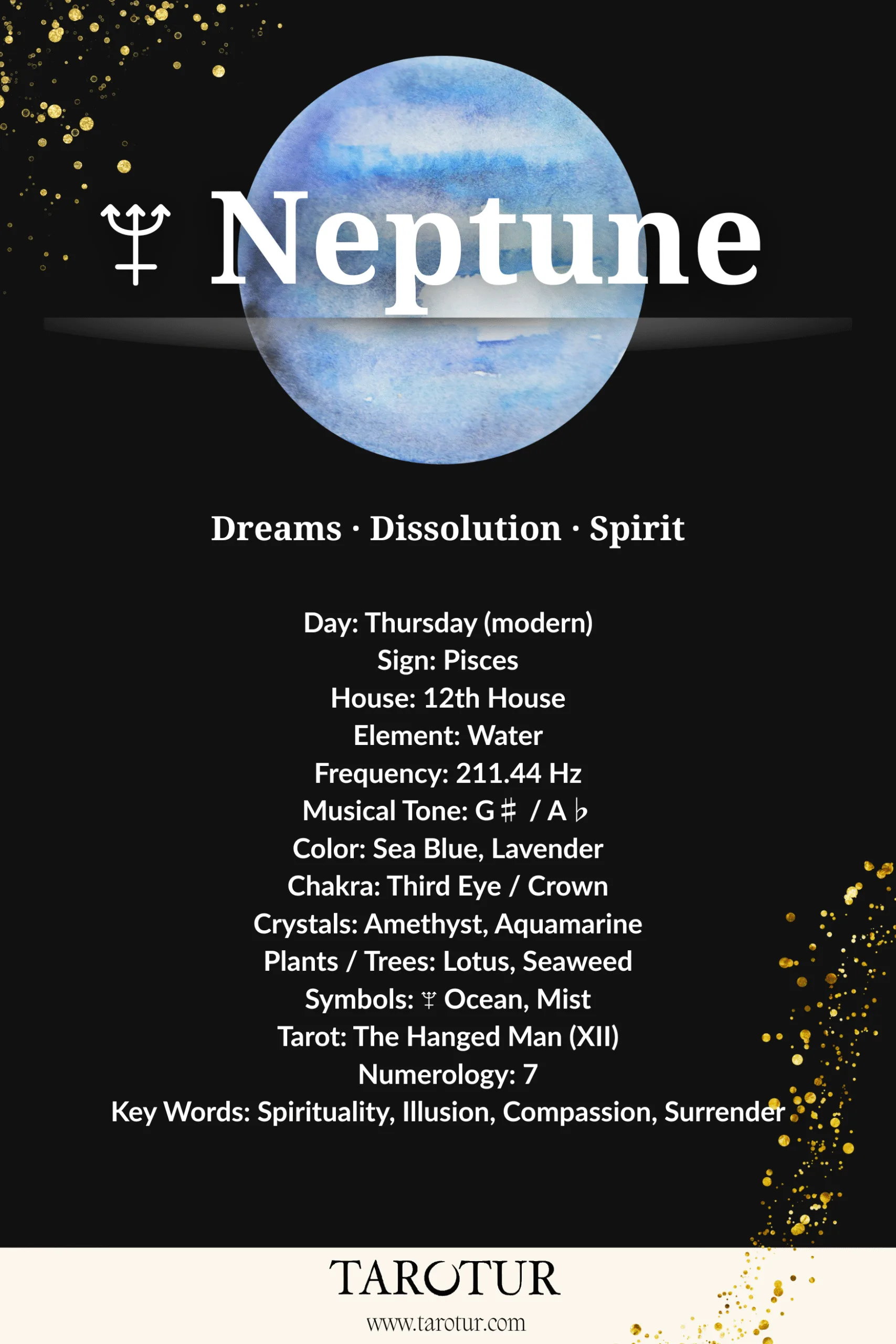
The final three houses govern public life, community, and the ethereal realm of spirit. The 10th House (Midheaven) dictates public standing, career achievement, and legacy. The 11th House is where we connect with groups, friends, and humanitarian ideals. Finally, the 12th House is the repository of the subconscious, hidden fears, past-life energy, and the ultimate space of spiritual surrender and dissolution. When Saturn is in the 10th House, the planet of structure and mastery imposes serious lessons on public life. Authority and success are not given easily; they must be earned through hard work, integrity, and facing one’s fears around competence. This placement ultimately delivers unshakable, earned mastery and a weighty, yet respected, societal role.
The Cosmic Dance: Planets as Archetypal Teachers
Planets act as living, dynamic archetypes, and their placement within a house dictates the classroom for their lesson. They are not merely passive influences; they are karmic teachers guiding us through specific growth processes. Understanding the blend of planetary energy and house environment is the essence of chart interpretation.
Consider the difference between a Jupiter placement and a Mars placement. Jupiter, the planet of grace and expansion, reveals where opportunity flows naturally. If Jupiter is in the 2nd House, financial or material growth comes relatively easily, often through optimism or generosity, but the accompanying lesson is managing excess. Conversely, Mars, the planet of assertion and conflict, shows where energy must be actively fought for. If Mars is in the 12th House, assertion (Mars) is often sublimated, hidden, or directed toward unconscious struggles. The individual must learn to consciously manage hidden hostilities or redirect that energy toward spiritual service, rather than self-sabotage.
This holistic view allows us to move beyond fatalism and embrace conscious action. The houses provide the setting, and the planets provide the script for mastering specific psychological disciplines. This requires deep, personal reflection:
- Where does my essential vitality (Sun) need to be centered to feel meaningful (e.g., 5th House creativity, 10th House vocation)?
- Which life area (house) calls for me to apply rigorous effort and mature discipline (Saturn)?
- Where do I instinctively seek freedom, revolution, or disruption (Uranus), and how does that affect the stability of that house’s concerns?
By answering these questions, we integrate the cosmic cycles into our personal life narrative, seeing life challenges not as arbitrary struggles, but as precisely tailored lessons for the soul’s ultimate benefit.
Conclusion: Integrating Your Cosmic Address
The 12 Astrological Houses offer essential context to our spiritual and psychological journey. They define the environments, relationships, and material circumstances that activate the potential held within our planetary placements. Our natal chart is not a rigid prediction, but a detailed map of the environments (houses) in which our soul’s essential energies (planets) are designed to learn and thrive. By consciously engaging with the karmic lessons presented by these house placements, we transform passive destiny into active purpose. Understanding your cosmic address allows you to take ownership of your soul expression, ensuring that every significant life area becomes a dedicated stage for conscious growth and spiritual realization.